Executive Summary
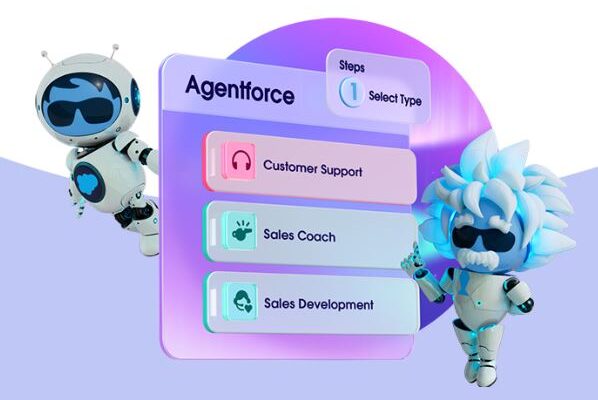
Salesforce Agentforce AI represents a strategic shift from reactive CRM workflows to predictive, autonomous revenue operations. Enterprises leveraging Agentforce are achieving faster sales cycles, improved lead prioritization, and measurable gains in forecast accuracy.
What Is Salesforce Agentforce?
Agentforce is an AI-powered automation framework built on Salesforce that enables intelligent orchestration of sales, service, and revenue operations using predictive models, automation logic, and real-time data signals.
- AI-based lead scoring and routing
- Predictive opportunity health scoring
- Automated sales task orchestration
- AI-powered customer service resolution
- Dynamic forecasting intelligence
Enterprise Adoption Drivers
Large enterprises are adopting Agentforce AI primarily to address operational inefficiencies, revenue unpredictability, and inconsistent sales execution across regions.
- Manual CRM workload exceeding 40% rep time
- Inconsistent lead qualification frameworks
- Low forecast accuracy across global regions
- Approval bottlenecks in complex deal cycles
- Fragmented data across ERP, CRM, and marketing platforms
Agentforce Enterprise Architecture Model
A successful enterprise implementation requires structured architecture governance, multi-cloud alignment, and secure data orchestration across systems.
- Salesforce Sales Cloud (core CRM)
- Service Cloud (case automation)
- Revenue Cloud / CPQ integration
- Einstein AI / Predictive Models
- Flow Orchestration & Apex automation
- Secure REST API integration with ERP
- Data Cloud (unified customer intelligence)
- Enterprise role-based governance model
Implementation Phases
Enterprise deployments typically follow a structured 4-phase roadmap to ensure scalability and governance.
- Phase 1: AI Readiness & Data Audit
- Phase 2: Architecture & Governance Design
- Phase 3: Agentforce Configuration & Automation
- Phase 4: KPI Optimization & AI Model Training
Security & Compliance Considerations
Enterprises in regulated industries must align AI automation with compliance frameworks including GDPR (EU), SOC 2 (US), and regional data governance mandates.
ROI & Business Impact
Across global enterprise implementations, Agentforce AI typically produces measurable operational improvements within 6–9 months.
- 25–40% reduction in manual sales tasks
- 18–30% improvement in forecast accuracy
- 20–35% faster lead response time
- Up to 28% acceleration in enterprise deal velocity
- Improved cross-region pricing governance
Why Architecture-First Implementation Matters
Agentforce is not a plug-and-play feature. Enterprises require architecture-first implementation to avoid AI misalignment, governance risks, and poor predictive outcomes.
Global Deployment Considerations (USA, UK, UAE)
Multi-region enterprises must consider data residency, multi-currency pricing models, regional approval frameworks, and distributed revenue governance when deploying AI automation globally.
Final Recommendation
Organizations seeking to modernize revenue operations should evaluate Agentforce AI not as a feature enhancement, but as a strategic revenue intelligence layer embedded within Salesforce.